What Is Brazilian Jiu-Jitsu?
Brazilian Jiu-Jitsu is a ground-based martial art that focuses on grappling, takedowns, and submission holds. The core philosophy: technique and leverage beat size and strength every time. A well-trained BJJ practitioner can control and submit a much larger opponent — making it one of the most practical martial arts for real self-defense.
BJJ became famous through the early UFC tournaments, where Royce Gracie — a smaller fighter — defeated much larger opponents from other martial arts backgrounds. Today it is a cornerstone of MMA, military combatives, and self-defense programs worldwide.
Training at Excel Combat Academy
Our head coach David Perez Padua holds a BJJ Black Belt and brings over 40 years of combined martial arts experience to every class. He has trained students of all levels — from nervous first-timers to competitive grapplers — and knows exactly how to meet you where you are.
What a Typical Class Looks Like
- Warm-up — dynamic stretching, movement drills, and hip escapes to prepare your body
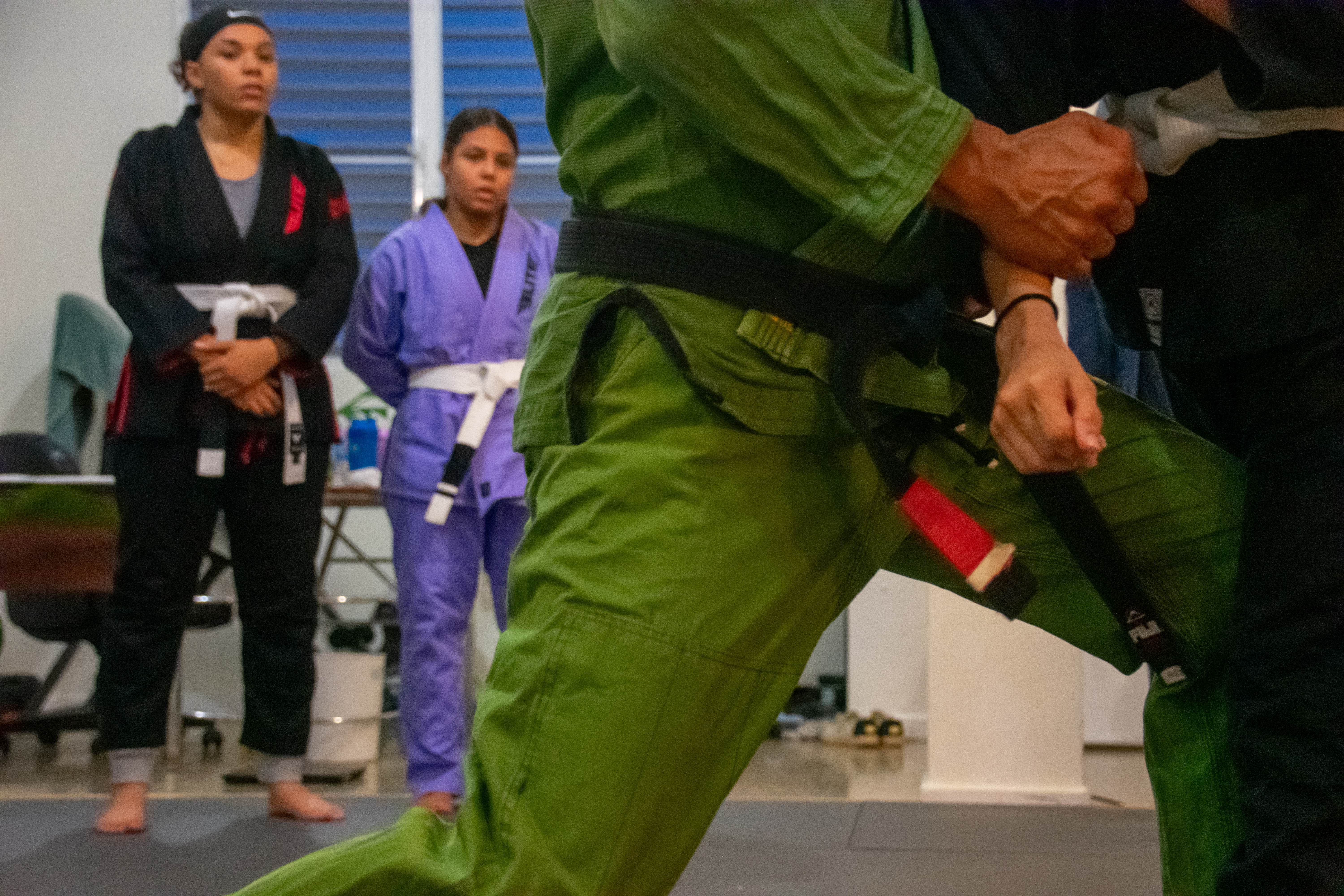
- Technique instruction — Coach David demonstrates a technique or sequence, breaking it into clear steps
- Drilling — you and a partner repeat the technique to build muscle memory
- Live rolling — controlled sparring where you test your skills in a safe, supervised environment
- Cool-down — stretching and brief debrief
Classes run approximately 60–75 minutes and are suitable for all skill levels.
Gi vs No-Gi
We offer both:
- Gi classes — train in the traditional BJJ kimono. Collar grips, lapel chokes, and sleeve control add a rich strategic dimension.
- No-Gi classes — athletic shorts and rash guard only. Faster-paced, more wrestling-influenced.
Many students train both. If you're unsure which to start with, try Gi — it tends to slow the game down enough for beginners to think and learn.
The Belt System
BJJ uses a colored belt ranking system that reflects your technical skill, mat time, and character:
- White Belt — where every champion starts
- Blue Belt — solid foundation, typically 1–2 years
- Purple Belt — intermediate competitor, typically 2–4 years
- Brown Belt — near mastery, typically 1–2 more years
- Black Belt — mastery of the art, 8–12+ years total
Stripes on each belt mark progress within that rank. At Excel Combat Academy, belts are earned through demonstrated skill and character — never given lightly, always celebrated.
Who BJJ Is For
BJJ works for virtually everyone:
- Complete beginners who have never trained any martial art
- People who want real self-defense skills — not just a workout
- Athletes looking to add grappling to their toolkit
- Anyone who wants to get fit in a way that doesn't feel like a chore
- Competitors ready to test their skills in local and regional tournaments
Start with Two Weeks Free
Not sure if BJJ is right for you? Try it free for two weeks — no credit card, no commitment. Come to class, meet the team, and feel the mat for yourself.
The only way to know is to try.
Frequently Asked Questions
01 Do I need any experience to start BJJ?
None at all. The vast majority of our students in Aguadilla start as complete beginners. Our coaches break down every technique into clear, beginner-friendly steps. Every black belt on the mat started exactly where you are now.
02 What is the difference between Gi and No-Gi BJJ?
Gi BJJ is practiced in a traditional kimono uniform, allowing collar chokes and fabric grips that add a unique strategic layer. No-Gi is practiced in athletic wear and uses wrestling-style underhooks and overhooks. Both complement each other beautifully and we teach both at Excel Combat Academy.
03 How long does it take to earn a black belt in BJJ?
BJJ black belts typically take 8–12 years of consistent training — they are among the hardest earned in all martial arts. But every step of the journey (white → blue → purple → brown → black) brings real skills and real confidence. We celebrate progress at every rank.
04 When can I start sparring?
Most students begin light technical sparring (rolling) after 2–3 months of training, once they have a solid foundation of basic positions and submissions. We always prioritize safety and progress at a pace that makes sense for you.
05 Is BJJ good for self-defense?
Absolutely. BJJ was originally developed for real self-defense scenarios. The ability to control a situation on the ground and safely restrain or submit an attacker is one of the most practical self-defense skills you can learn — regardless of your size.
- Gi and No-Gi classes available
- Beginner-friendly fundamentals track
- Intermediate and advanced classes
- Live sparring (rolling) sessions
- Traditional belt progression system
- Competition preparation & team support
- Open mat sessions
- 2-week free trial included
- Learn practical self-defense that works in real situations
- Build mental toughness and problem-solving skills
- Get in the best shape of your life while having fun
- Develop discipline, respect, and humility
- Train with a welcoming community — no ego, no judgment
- Progress at your own pace with structured belt curriculum
Ready to start?
Try Brazilian Jiu-Jitsu (BJJ) free for 2 weeks. No commitment required.
Start Free 2-Week TrialStart Your Free 2-Week Trial
Interested in Brazilian Jiu-Jitsu (BJJ)? Fill out the form and we'll reach out within 24 hours to schedule your first class.